
Introduction
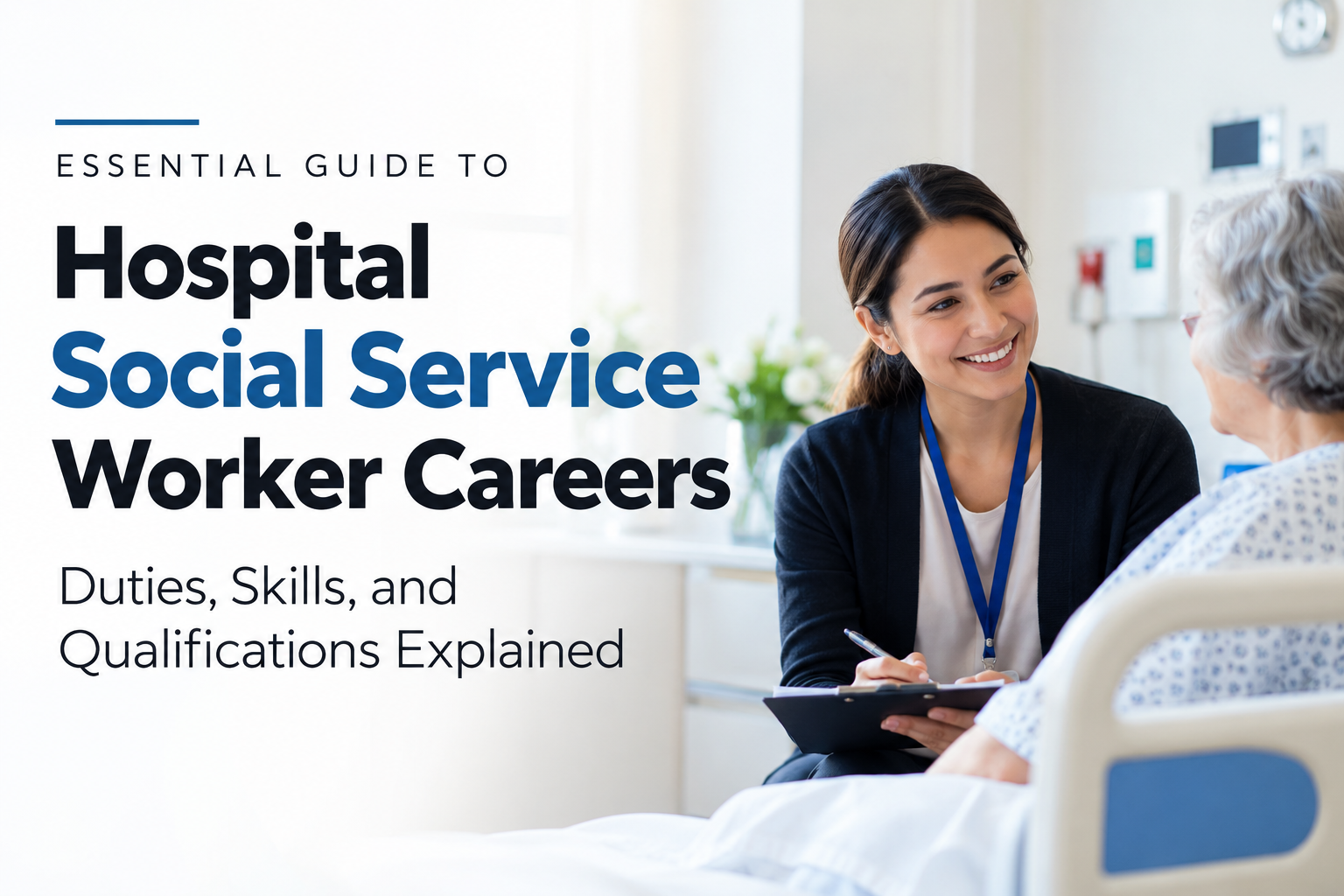
The role of a hospital social service worker is fast-paced and rewarding. This article explains hospital social service worker jobs duties and skills early so readers — including Ontario students, new graduates, job seekers, and frontline staff — can evaluate career fit, prepare for interviews, and plan next steps. Throughout, the distinctions between Social Service Worker and Social Worker roles are kept clear, and readers are directed to authoritative Canadian sources for registration and policy details.
What hospital social service worker jobs duties and skills look like
Typical duties in hospital settings
Hospital social service worker jobs duties and skills often center on supporting patients and families during admission, treatment, discharge planning, and transitions of care. Common responsibilities include:
- Conducting psychosocial assessments and documenting needs;
- Providing short-term emotional support and advocacy;
- Coordinating community resources, referrals, and follow-up services;
- Assisting with discharge planning, including housing, income supports, and community care referrals;
- Collaborating with interdisciplinary teams (nurses, physicians, case managers, allied health);
- Maintaining clear, timely documentation that respects privacy and confidentiality rules.
These duties require flexibility: in a busy ward you may handle crisis stabilization one hour and arrange community follow-up the next.
Core skills and practical examples
Essential interpersonal and professional skills
Employers look for both technical and interpersonal strengths when recruiting hospital social service workers. Key hospital social service worker jobs duties and skills include:
- Assessment skills: rapid yet thorough psychosocial assessment to identify barriers to care;
- Communication: plain-language explanation of options, active listening, and clear written records;
- Advocacy and systems navigation: knowledge of community services and ability to negotiate access on a patient’s behalf;
- Cultural humility and trauma-informed practice: adapting supports to diverse backgrounds and safety needs;
- Boundary-setting and self-care: managing caseload, asking for supervision, and using peer supports to avoid burnout.
Practical example: when discharging an older adult with mobility limits, a hospital social service worker arranges home supports, connects the family with local transportation options, and documents agreed follow-up calls.
Education, qualifications, and regulatory considerations
Training and credential pathways
Most hospital social service worker jobs expect completion of a recognized Social Service Worker diploma or equivalent post-secondary program. Distinguish this from the Social Worker role: Social Workers generally hold a degree and may be regulated differently. For Ontario-specific registration or protected title questions, consult the provincial regulator and the OCSWSSW for the most current guidance.
Employers may prefer or require additional training in areas such as mental health, addictions, gerontology, or trauma-informed care. Continuing education and on-the-job mentoring help build competencies that are essential for hospital work.
Workplace settings, career growth, and job search tips
Where hospital social service worker roles are found
These roles exist in acute hospitals, specialty units (e.g., oncology, pediatrics), rehabilitation centres, and sometimes within community-based hospital programs. For labour market information and general job trends, consult Job Bank and provincial resources like Ontario.ca.
Career growth and interview preparation
Progression can include senior SSW roles, team lead positions, or transfers into specialty hospital programs. When preparing for interviews, demonstrate your knowledge of hospital social service worker jobs duties and skills by:
- Describing a concise assessment and discharge-planning example;
- Explaining how you handle documentation and confidentiality in a hospital context;
- Sharing a short plan for managing competing demands and seeking supervision when needed.
Tip: tailor your resume to highlight relevant practicum and hospital-experience placements and link to professional profiles or letters of reference.
Frontline practice essentials: documentation, safety, and referrals
Practical steps for daily practice
On the ward, prioritize these actions every shift:
- Check the unit’s referral list and triage urgent needs;
- Document assessments and care plans clearly and contemporaneously;
- Use secure channels for sharing patient information and confirm consent when required;
- Identify and escalate safety concerns promptly following local policies;
- Provide concise, relevant referrals and follow-up instructions for patients and caregivers.
Because policies and legal duties can change, verify specifics (for example, privacy rules or child protection reporting) with your employer and official sources such as Ontario.ca or professional regulators.
Actionable checklist for job seekers and new workers
- Complete a recognized Social Service Worker program and keep transcripts accessible;
- Maintain a portfolio with practicum summaries and anonymized documentation samples (as permitted);
- Build a short list of community partners and referral contacts in your region;
- Prepare 3 brief stories showing assessment, advocacy, and discharge planning for interviews;
- Refresh knowledge of privacy, consent, and workplace safety policies via employer orientation and Job Bank guidance;
- Explore career content and job listings on SocialServiceWorker.ca and the careers category at SocialServiceWorker.ca › Careers & Jobs.
Conclusion
Hospital social service worker jobs duties and skills combine rapid assessment, practical advocacy, clear documentation, and teamwork. For Ontario students and job seekers, focus on building core assessment and systems-navigation skills, learn workplace policies, and use trusted Canadian resources like OCSWSSW and Ontario.ca to confirm current regulatory and practice requirements. Use the checklist above to prepare for interviews and shifts. Practical takeaway: prioritize demonstrable examples of your assessment-to-discharge workflow to show how your hospital social service worker jobs duties and skills make a measurable difference in patient care.